

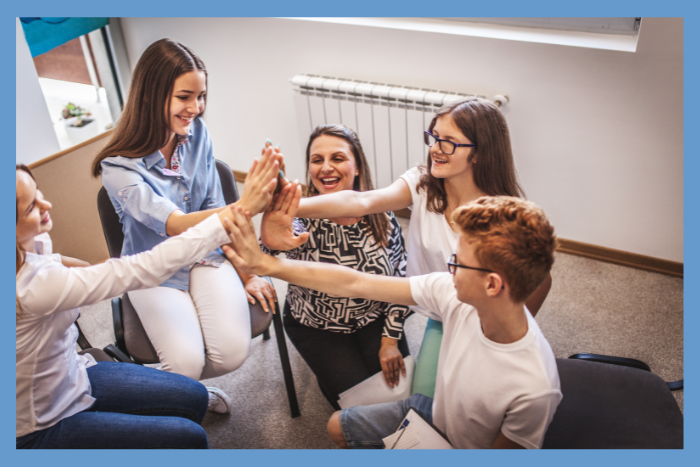
Healing doesn’t happen through conversation alone. That’s why Embrace U takes a hands-on approach to mental health treatment to help adolescents turn therapeutic practices into real-world skills they can use long after treatment ends.
Our therapists use activities, games, and art projects to help explain ideas and concepts to our teen and pre-teen patients. The hands-on approach allows adolescents to learn by doing, rather than just talking or listening. It can help teens overcome the awkwardness of traditional talk therapy. A hands-on approach to therapy not only achieves short-term improvement but also helps participants and their families build the tools needed for sustainable emotional and behavioral health. Many activities give participants a better understanding of what could be causing a mental health issue and how to manage symptoms.
“Treatment is hands-on, relationship-centered, and focused on helping clients build practical tools they can use outside of therapy,” said Alyssa Sebastian, Embrace U’s regional director. “We don’t just talk about coping skills, we help clients practice them in real time.”
What is Classified as Hands-On Treatment?
The hands-on approach, also known as experiential therapy, is a therapeutic approach that uses expressive activities such as role-playing, art, crafts, and props to help individuals safely revisit, process, and heal from past emotional experiences and relationship challenges, according to Psychology Today.
By implementing experiential therapy in sessions with our adolescent clients, we encourage them to tap into their past experiences creatively to work through them. By using hands-on activities, “we are making therapy engaging and something our adolescents experience, not just talk about,” said Antonay Rodgers, our Mt. Juliet location’s administrator. Hands-on approaches like this allow teenagers to rewrite negative experiences into positive ones, and shape their own reality and move toward higher self-esteem.
How Embrace U Uses the Hands-on Approach
Embrace-U implements the hands-on therapeutic approach in a variety of ways with our teen and pre-teen participants. For starters, we use art therapy, coping skills, toolkits, interactive cognitive behavioral therapy (CBT) or dialectical behavioral therapy (DBT) activities, role plays, and team-building exercises.
A great example of how Embrace U implements experiential therapy is through the smoothie activity.
“The smoothie activity is one of my favorites because it’s simple, engaging and really gets the kids thinking,” said Rodgers. “The goal is to help clients understand that their mental health and overall wellness are made up of many different ‘ingredients,’ just like a smoothie. They identify things that help them stay well: healthy coping skills, supportive relationships, sleep, nutrition, movement, hobbies, self-care, and other protective factors and then we talk about how all those pieces work together.”
Each wellness ingredient is also tied to a respective fruit or yogurt, so as our adolescent patients work through recognizing their healthy habits, they simultaneously create an ingredient list for their own customized smoothie. Our team of therapists then allows the participants to make their custom smoothies and taste what their perfect combination of wellness looks like.
“It’s a fun, interactive way to reinforce that recovery isn’t just one thing; it’s the combination of healthy habits and support that make the biggest difference,” said Rodgers.
Is the Hands-on Approach Best for Your Child?
Whether you think the hands-on, or experiential, approach might be a perfect fit for your child or if you’re simply curious to learn what there is to offer beyond the therapy chair, the team at Embrace U is here to help. Our therapists offer various hands-on activities throughout all our programs that will allow your child to heal, grow, and create long-lasting positive feelings.
For many parents, experiential therapy can be an excellent treatment option because it meets adolescents where they are. Some teens struggle to put their feelings into words or may be reluctant to engage in traditional talk therapy. Hands-on therapeutic experiences can feel less intimidating, helping them open up, process emotions more naturally, and become more invested in their treatment. By actively participating in their healing process, adolescents often gain confidence, resilience, and healthier ways to respond to life’s challenges.
Using evidence-based experiential techniques, skilled therapists work alongside each patient to foster deeper personal insight, promote emotional healing, and help establish healthier patterns of thinking and coping that support long-term recovery and well-being.
At Embrace U, we all share the same goal: help our pre-teens and teens build practical tools to use and thrive in their daily lives outside the therapy room. Call us at 833-733-4325 to learn more about our programs, verify insurance, and schedule an intake assessment.